Bitcoin payment gone wrong: which cases still have a remedy
When a Bitcoin payment to a casino goes wrong, the useful first question is not what to say to support but which of four failures this is. Three of them ended the moment the transfer was written into a block. One did not, and it is the only one a person on the other end of a chat window can do anything about.
Sorting the failure takes two minutes and decides whether the next hour goes into a complaint that can work or one that cannot.
The one that can be fixed
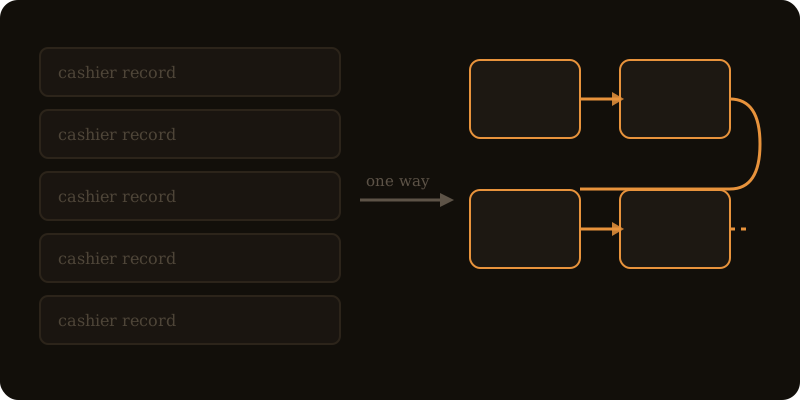
Coins that reached the cashier's own address and were not attached to your account. The money is where it was meant to be; the cashier's record did not follow. That is bookkeeping, and bookkeeping is exactly what an operator controls. Support can match a transfer to an account once it can see which transfer you mean, and the identifier in your wallet's history is what lets it see.
Everything useful to say in that conversation fits in three items: the transaction id, the address you sent to, and the amount. Sent in that order, in the first message, they turn a story into a case.
The three that finished at the moment of sending
A transfer to the wrong address belongs to whoever holds the keys to that address, if anyone does. A transfer on a route the cashier does not run lands somewhere the operator may not control at all. A coin the cashier does not recognise is, from its side, a payment that never happened. In all three the coins have left, and the operator has neither the means to pull them back nor, usually, the means to prove that the person asking is the person who sent them.
It is worth being plain about the tone this calls for. Asking support to reverse one of these is not rude, but it is a request for something nobody in the arrangement can do, and a long exchange can leave a reader hoping for an outcome that was settled at the send.
Before a block: the only stage with room to move
A transfer that is still waiting to be written into a block is not yet final in the way the rest of this site describes. It sits in a pool of waiting transfers, and some wallets can still replace it, while others will simply see it drop out after a while and the coins stay put. That is the single window in which the sender has any lever at all, and it closes the moment a block takes the transfer in.
Telling these apart is simple: look the transaction id up in a block explorer. If it shows no block, nothing is final yet; if it shows one, the section above applies to what follows.
Short answers
Which failure can actually be fixed?
Coins that arrived at the operator's address and were not matched to an account. The money is there; the record is not.
What cannot be fixed?
A transfer to the wrong address, on a route the cashier does not run, or in a coin it does not recognise. None of those can be recalled.
Does a support desk have any power over the chain?
None. It can correct its own records and nothing beyond them.
What is needed to open a useful case?
The transaction id, the destination address and the amount. Without the id there is a story rather than a case.
Related pages
Three pages that pick up from here.
Withdrawal records — what to keep so that the one fixable case can actually be fixed
Processing — why the word pending describes the cashier's queue and not a chance to cancel
Operators — the twelve cashiers and what each one states about the coin