Bitcoin casino on a phone: what the small screen hides
A phone changes where payment mistakes happen and nothing about whether they can be undone.
The account is the same, the coin is the same and a transfer signed with a thumb is exactly as
final as one signed anywhere else.
This page is about the part of a Bitcoin deposit a small screen makes easier to get wrong, and
the few habits that remove most of the risk. Which operators state that they take the coin is
on the operator pages, and this page is not about that.
Is there a different casino on a phone?
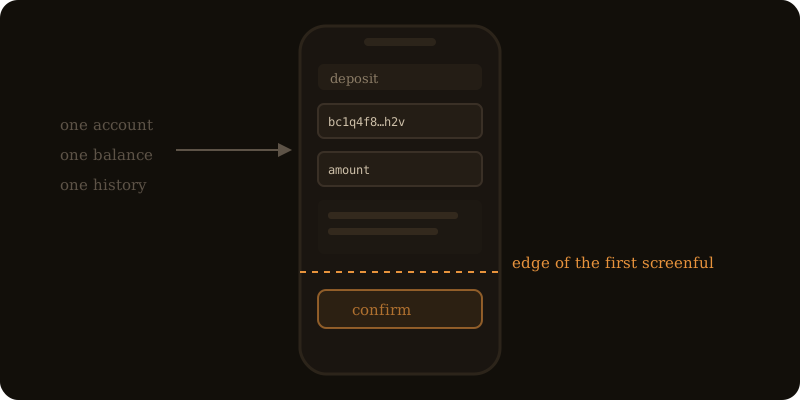
No. A responsive site is the same account drawn on a smaller screen: one balance, one history, one set of limits, one login. Anything that was credited on a computer is credited on the phone, and anything sent from the phone is on the same ledger as a transfer sent from a desk.
That sameness is the point to hold on to, because the small screen suggests otherwise. A deposit tapped with a thumb on a train feels lighter than one typed at a keyboard, and it is exactly as heavy. A Bitcoin transfer signed on a phone cannot be recalled by the phone, by the casino or by anyone else, and the screen size has no say in it.
What the small screen hides
Mostly the part that matters. Browser bars take real height, so the line that states the amount and the control that confirms it often sit below the first screenful, and a reader taps through what they cannot see in full. A long address is cut with an ellipsis in the middle, which looks like confirmation and verifies nothing.
The remedy is slower than the interface wants it to be. Scroll until the whole form is on screen. Read the amount where the confirm control sits. Read the beginning and the end of the address in the wallet and compare them with the cashier, because the middle is the part a phone shortens.
Where the money moves from, and why that matters here
A phone is often both the place the account lives and the place the wallet lives, and it can hold the second factor too. That makes it convenient and concentrates risk: one lost or unlocked device reaches the account, the coins and the code that protects them.
Two habits cover most of it. Lock the device with something better than a four-digit code, and turn on the second factor for the casino account, since a withdrawal to an address you do not control is as final as a deposit to the wrong one. For the moment of sending, copy the address once, paste it once and read the result before confirming.
Apps, and the browser instead
Some operators offer an installable app, many only the site, and a cashier is the same in both. What differs is how easy it is to be somewhere that looks like the operator and is not: a lookalike app or a mistyped domain has the same effect on a Bitcoin deposit as a wrong address, which is to say there is no way back.
Open the operator from a bookmark you made yourself, or from a link you trust, and check the domain before reading any address on the screen. This site's operator links go to the operator in a new tab and ask your age first, so you know when you have left.
What the phone leaves exactly as it was
The return and volatility of a game, the checks on identity that tend to appear around a withdrawal, the limits you can set before a session and the history you can read back. None of those consult the screen they are shown on, and none of them is a reason to deposit more or less from a phone.
Questions about paying from a phone
Is the balance different on a phone?
No. A responsive site shares one balance, one history and one set of limits with the desktop view.
What is the commonest mobile payment mistake?
A clipboard paste that carries a trailing space or a truncated address. Both are invisible on a short line.
Why does a deposit form feel cramped on a phone?
Browser bars take real height, so the summary line and the confirm control often sit below the first screenful.
Should a wallet app and a cashier be used side by side?
Switching apps is where a half-copied address happens. Copying once, pasting once and reading the result is the safer order.
Does two-factor protection work the same on mobile?
Yes, and it matters more: a phone holds the account, the wallet and often the second factor at once.
Related pages
Three pages that go further.
Paying from a phone — the clipboard, the app switch and the short line, one at a time