Bitcoin payments from a phone: where the mistakes live
A deposit made from a phone is as final as one made anywhere else, and the usual mistakes are not about the network at all. They are about a short screen, a clipboard that hides what it holds and an app switch that happens in the middle of a payment.
This note walks through those three, because they account for most of the payments that go wrong from a phone and all of them can be avoided without any technical skill.
A short screen and a long address
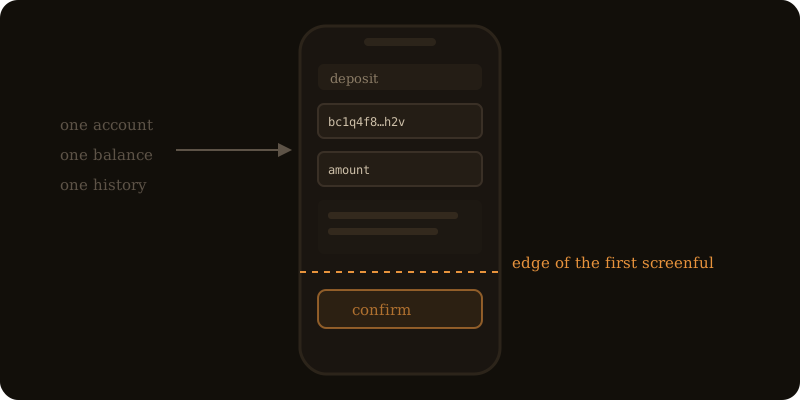
A Bitcoin address is a long string, and a phone shortens it with an ellipsis in the middle. What the screen shows is the beginning and the end, which looks reassuring and checks nothing in between. If the string was altered anywhere inside the hidden part, the visible parts still look right.
The fix is dull and reliable: copy the address from the cashier screen, paste it into the wallet, and read the beginning and the end in the wallet against the cashier, then do it again for a long deposit.
The clipboard
Copying is an invisible step. A selection that missed the last characters, or a trailing space picked up from the screen, produces an address that is wrong in a way no line on a small screen reveals. Scanning a code removes the clipboard from the chain altogether, which is why it tends to be the safer route, though the amount still has to be read with the eyes.
Switching apps in the middle
Leaving the cashier for the wallet and coming back is where a page can reload and show a fresh address while the old one is still waiting on the clipboard. Copy once, paste once, send, and only then return to the cashier. A phone changes none of the finality described elsewhere on this site, but it adds a few places where a mistake can slip in unseen, and each of them can be closed with one habit.
Short answers
Is a scanned code safer than a pasted address?
Usually, because it removes the clipboard from the chain of custody. The amount still has to be read on screen.
What goes wrong with a clipboard on a phone?
A partial selection or a trailing space, neither of which is visible on a line that has been shortened to fit.
Why is app switching risky?
Because a backgrounded page can reload and generate a new address while the old one is still on the clipboard.
Does a phone change anything about finality?
Nothing at all. A transfer signed on a phone is as final as one signed anywhere else.
Related pages
Pages that go with this one.
Mobile — the cashier on a phone, and the account that stays the same
Payment gone wrong — what can be repaired when a phone payment lands wrong
Withdrawal records — what to save from a phone before the screen moves on